

Why do we spend so much time thinking about our homes before we ever do anything about them?
We notice the kitchen that doesn’t work. The room no one uses. The storage we never seem to have enough of. We imagine opening a wall, adding a room, moving the kitchen—or sometimes moving altogether.
For months, sometimes years, we collect ideas. Save photographs. Walk through other people’s homes and notice what feels different. Talk about what we’d change if we ever decided to do something.
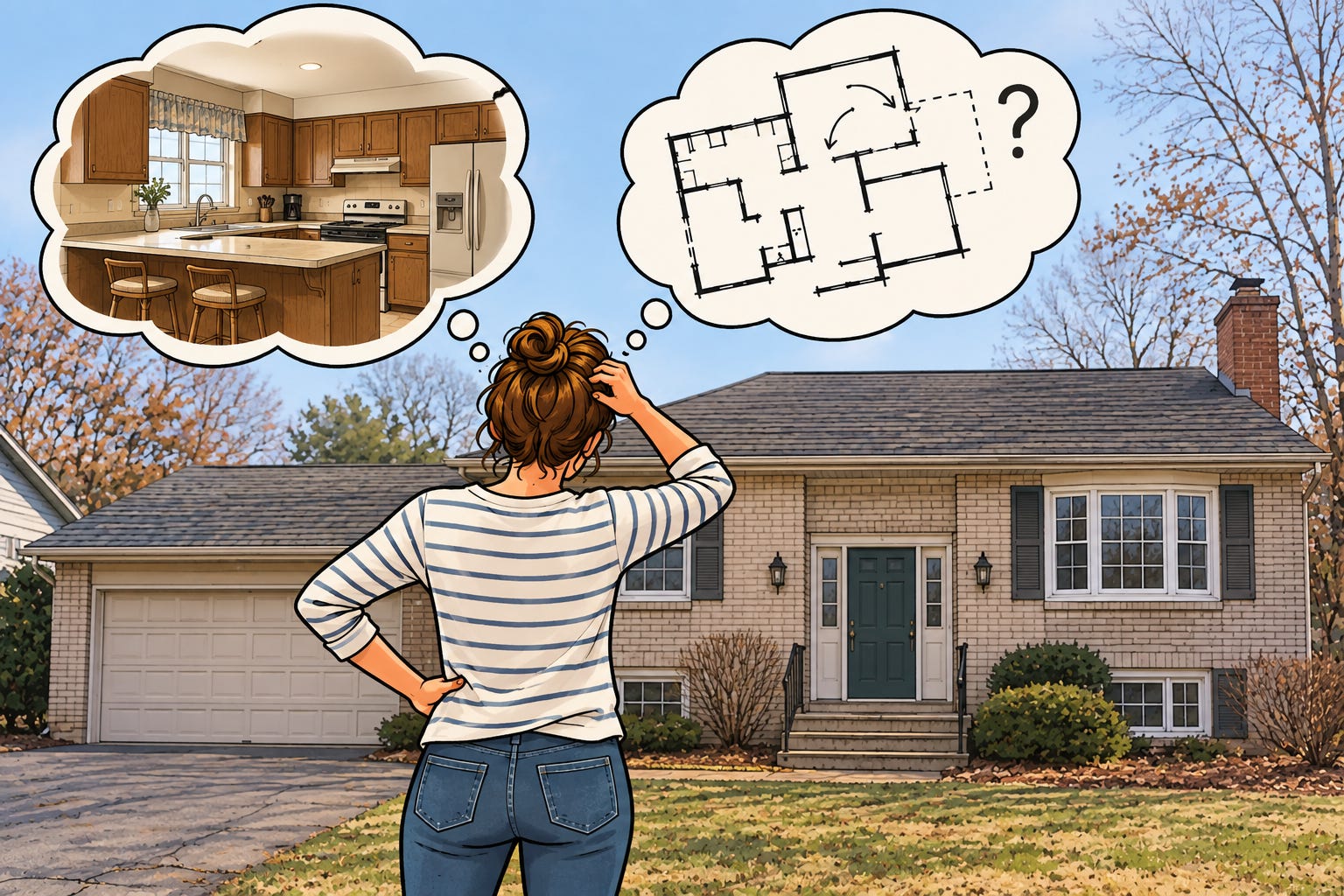
And then one day, we decide it’s time to act.
That’s usually the moment we believe the real work begins.
We believe the next step is the fist valuable step we take.
We call a designer. Meet with a contractor. Visit a showroom. Share our Pinterest Boards and start talking about plans, products and budgets.
And then we ask a stranger to interpret what our heart is trying to tell us.
And that’s usually when we meet, after you’ve already decided what you think the solution is.
This is not the first step.
Some of the most valuable work you’ll do on your home happens before any of those things.
That time you’ve spent noticing, questioning, imagining and even disagreeing about what should change isn’t wasted time. It’s trying to tell you something.
It’s the most valuable part of the entire process.
And we need to capture that. That’s the map we need to follow.
It’s not the 7 step plan or process, it’s not the key to hiring a designer or contractor.
It’s figuring out the problems we’re solving and what happens once we solve them.
Did our life change for the better or did we just add debt?
Are we getting closer to the person we see when we close are eyes and dream or did we create somene else’s?
The problem is that most of us have never been taught what to do with it.
In developing the case studies for our website and sharing them here on Regret-Free Home, I’ve noticed something about the way I’ve worked with clients for years.
They usually came to me with a solution already in mind: a bigger kitchen, a different layout, more storage, an addition.
But I rarely accepted the solution as the starting point.
I learned to back up.
Why this change? Why now? What isn’t working? What happens there that frustrates you? And if we fix all of that, what do you want to be happening instead?
Eventually, we would get somewhere very different from cabinets, countertops and floor plans.
We got to the life they wanted to be living inside their home.
Only then could we pressure-test the decisions that followed against that definition of success.
Looking back at those case studies, I can see it clearly. Every beautiful remodel also tells a story about the life my clients wanted to be living. Throughout our design and planning work, we were testing decisions against that desire.
Success wasn’t really about more storage, a new layout or coordinated finishes. Those were the solutions.
The measure of success was whether those solutions supported the life they wanted to live.
And I realized…
There is an important space between knowing that something about your home needs to change and knowing what changes are actually worth making.
I call it the Clarity Gap.
And what happens inside that gap can determine the scope of your project, the money you’ll spend, the compromises you’ll make…and sometimes whether remodeling this house is the right decision at all.
Good news! Closing that gap is something you can begin without making a single hiring commitment for a remodel you haven’t figured out yet.
I think we’ve come to believe that a successful remodel, a showcase home or a picture-perfect life requires a talented team of professionals guiding us through every curated design and planning decision.
I’m ready to question that assumption.
I wonder how much the cost of creating a home that supports our lives and aspirations has become inflated because we’re following other people’s ideas about what we should need and want.
Don’t get me wrong. There’s enormous value in hiring the right professionals when it’s time to design, plan and execute a project.
But before their expertise can truly serve us, I believe we first need to understand our own definition of success.
Maybe the months or years you’ve spent thinking about your home weren’t the delay before the work began.
Maybe they were the beginning of the work all along.
There are (3) questions that get to the heart each time:
· What do you want your home to make possible?
· How do you want to live differently inside it?
· What matters enough to change—and what doesn’t?
Substack is full of people choosing a different path for their work and creative lives. It seems like the perfect place to experiment with what it might look like to choose a different path for our homes, too.
So that’s what I want to explore here.
Not simply what your home should look like.
What do you want your life inside it to look like?
Comment below and let’s start the conversation…